
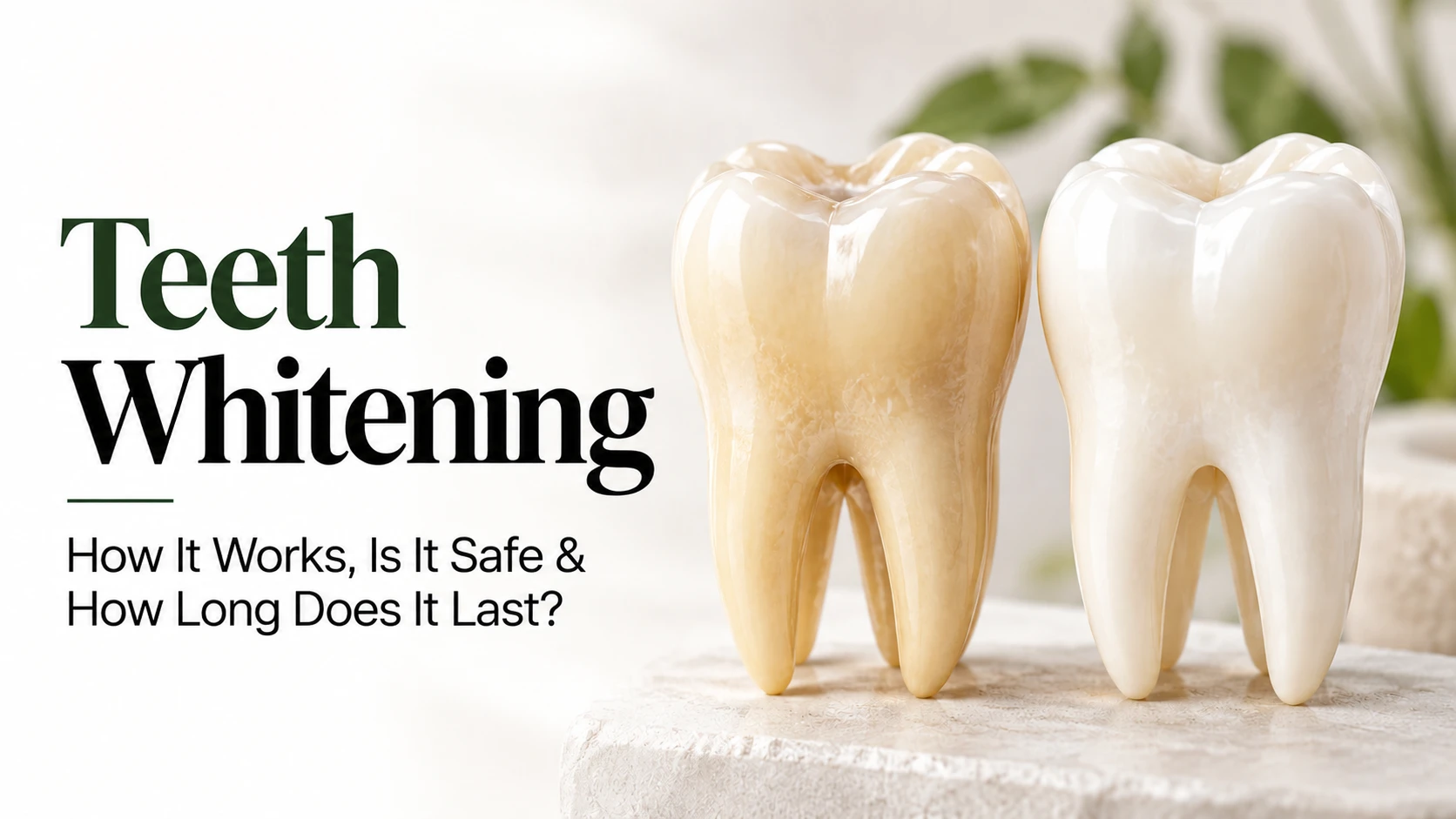
Perhaps your teeth look more yellow in photographs, despite regular brushing. That does not necessarily mean they are unhealthy. Teeth whitening can improve certain stains, but it is not suitable for everyone. Understanding the cause of discolouration is the best place to start. You may discover that cleaning is enough, or that your natural tooth shade is perfectly healthy.
What Is Teeth Whitening?
Teeth whitening is a cosmetic treatment that lightens the colour of natural teeth. Professional whitening generally uses bleaching gel rather than polishing away tooth structure. It can improve some discolouration, but it cannot remove tartar, repair cavities or change the colour of fillings and crowns. Results differ between patients.
Why Do Teeth Become Yellow or Stained?
Healthy teeth come in different shades. Enamel is translucent, and the dentine beneath is yellower. Ageing can make that colour more visible.
Dentists distinguish two main forms of tooth discolouration:
Extrinsic stains develop on the surface, often from tea, coffee, tobacco or strongly coloured foods. Deposits may also dull teeth; cleaning can remove some stains.
Intrinsic discolouration occurs within tooth structure. It may be related to ageing, developmental changes, particular medicines taken while teeth were forming, or an injury to a tooth. Responses to bleaching vary. A suddenly darkened tooth needs examination first.
How Does Teeth Whitening Work?
Most bleaching systems use hydrogen peroxide or carbamide peroxide. These substances release compounds that act on coloured molecules within enamel and dentine, making the teeth look lighter. Bleaching does not scrape off enamel.
How much a tooth lightens depends on its starting colour, the cause of staining and the whitening system used. Some stains respond noticeably; others change very little. Your dentist can explain realistic expectations.
What Happens During Professional Teeth Whitening?
The teeth whitening procedure varies by product, but commonly involves these steps.
1. Examination and shade assessment
Your dentist checks teeth, gums, sensitivity and restorations. Cavities, gum inflammation, cracks or exposed roots may need attention first. The cause of discolouration matters.
2. Cleaning, if necessary
If plaque, tartar or surface deposits are present, professional cleaning may be advised before bleaching. Cleaning also helps reveal the underlying shade.
3. Gum protection and gel application
For an in-clinic teeth whitening treatment, the dentist may protect the gums and other soft tissues before applying a peroxide-based whitening gel. Concentrations and application periods vary. Some systems use a light, but not every whitening method requires one.
4. Monitoring and aftercare
The dentist monitors comfort and the whitening response. Some plans involve an in-clinic visit; others use individually fitted trays at home under dental supervision. Aftercare covers sensitivity, staining and touch-ups. The number of visits depends on the chosen method and how your teeth respond.
Is Teeth Whitening Safe?
If you wonder “is teeth whitening safe?”, the answer depends on your dental health. Whitening is generally considered safe for appropriately selected patients when suitable products are used correctly and the gums are protected. However, it is not risk-free.
The most common teeth whitening side effects are temporary sensitivity and gum irritation. Some patients experience brief discomfort with cold drinks, while others notice little change. Incorrect use or repeated unsupervised treatment increases risks. If you already experience pain when eating or drinking, have that symptom investigated before starting cosmetic treatment.
Can Teeth Whitening Damage Enamel?
Appropriately used whitening gels are designed to change tooth colour without intentionally removing enamel. Repeated use is not necessarily harmless. Excessive bleaching, unsuitable concentrations and abrasive or acidic remedies may cause irritation or affect tooth surfaces. More bleaching does not necessarily improve results. In particular, bleaching cannot rebuild lost enamel or treat damage caused by acid erosion.
Why Can Teeth Whitening Cause Sensitivity?
Peroxide can temporarily affect the inner tissues of a tooth, producing sensitivity to cold or sweet foods. Symptoms usually settle, but vary. Existing sensitivity, exposed roots or cracks may complicate treatment.
Tell your dentist if discomfort develops. They may pause treatment or recommend desensitising toothpaste. Severe or persistent pain should not be dismissed as a normal part of whitening.
Does Teeth Whitening Work on Every Type of Stain?
No. Some yellow or brown discolouration responds well, while certain grey, developmental or trauma-related changes may be less predictable. Whitening also will not resolve a dark appearance caused by untreated dental disease. Another approach may be more appropriate.
Can Crowns, Fillings or Veneers Be Whitened?
Whitening agents lighten natural tooth structure, not restorative materials in the same way. Tooth-coloured fillings, crowns and veneers generally retain their existing shade. If the surrounding teeth become lighter, these restorations may look darker by comparison. Discuss visible dental work before bleaching; replacing an otherwise sound restoration solely for appearance is a separate decision with costs and clinical considerations.
Teeth Cleaning vs Teeth Whitening: What Is the Difference?
The difference between teeth cleaning and whitening is their purpose. Cleaning removes plaque, hardened tartar and some surface stains to support oral health. It may make teeth look brighter without altering their underlying shade.
Whitening, by contrast, uses bleaching agents to lighten natural tooth colour. It does not remove tartar or treat gum disease. If deposits are your main concern, professional teeth cleaning may be the more useful first step.
How Long Does Teeth Whitening Last?
Whitening is not permanent. Some people notice staining returning within months; others retain a lighter appearance for a year or longer. Duration depends on treatment, hygiene, and exposure to staining substances. Someone who drinks several cups of tea daily may notice colour returning sooner than someone who rarely consumes staining drinks.
Colour can also settle slightly after treatment as teeth rehydrate. This is different from gradual restaining. Touch-ups should follow dental advice, not every minor shade change.
How Can You Keep Teeth Whiter for Longer?
Brush twice daily with fluoride toothpaste, clean between your teeth and attend dental reviews as advised. Reducing frequent exposure to strongly coloured drinks can help; rinsing with water after tea or coffee is a simple option. Avoid tobacco. Regular cleaning can manage new surface stains, while any whitening touch-up should follow your dentist’s advice. Avoid harsh scrubbing.
Professional Teeth Whitening vs At-Home Products
Dentist-supervised whitening begins with an assessment. The dentist can select an appropriate product, provide fitted trays when indicated and change the plan if sensitivity develops.
Over-the-counter options include strips, gels and whitening toothpastes. Some work when used correctly, but results vary. Check product instructions and strength before use. Whitening toothpaste mainly removes surface stains rather than bleaching deeper tooth colour. Avoid lemon juice, abrasive powders, excessive baking soda or household bleaching chemicals: these can damage tooth surfaces or irritate the mouth.
Who May Not Be Suitable for Teeth Whitening?
Whitening may be delayed or modified if you have untreated tooth decay, inflamed gums, cracks, exposed roots or marked sensitivity. It is generally avoided during pregnancy or breastfeeding because safety information is limited. Young patients and people with extensive visible restorations require particular consideration. Suitability needs individual assessment.
How Much Does Teeth Whitening Cost?
Teeth whitening cost varies with the method used, number of appointments, type of staining and whether cleaning or other care is needed first. Dentist-supervised home trays and in-clinic treatment may have different fees.
When comparing teeth whitening cost in Ahmedabad, ask what the estimate includes: an examination, the whitening system, trays if required, follow-up advice and any separate preliminary treatment. An accurate quote requires an assessment. The lowest price is not necessarily the best comparison if the recommended methods and supervision differ.
Teeth Whitening in Ahmedabad
If you are considering teeth whitening in Ahmedabad, begin with a dental examination to establish why your teeth appear darker and whether bleaching is appropriate. Discuss sensitivity, restorations and limitations before choosing a method.
At Carrot Dental, Satellite, Ahmedabad, patients can discuss these questions with a dentist in Satellite, Ahmedabad. The clinic is opposite Seema Hall on 100 Feet Road. For appointment enquiries, you can contact Carrot Dental. An examination helps determine whether whitening, cleaning or another approach is worth considering.
Frequently Asked Questions
Is teeth whitening safe?
It is generally safe when the teeth and gums are suitable and treatment is used correctly. Sensitivity and gum irritation can still occur.
Does whitening damage enamel?
Properly used products are not intended to remove enamel. Excessive or inappropriate use can increase the risk of problems.
Does teeth whitening hurt?
Some people have little discomfort; others experience temporary sensitivity, especially to cold. Persistent pain needs assessment.
How long does teeth whitening last?
Results vary. They can fade within months or remain noticeable longer, depending on habits and treatment.
Does whitening work on yellow teeth?
Often, but the response depends on whether the colour is natural, surface staining or a deeper change.
Can fillings or crowns be whitened?
No. They generally do not lighten like natural teeth and may look mismatched afterwards.
Is teeth cleaning the same as whitening?
No. Cleaning removes deposits and some surface stains; bleaching changes natural tooth colour.
Can I whiten sensitive teeth?
Possibly, after your dentist identifies the cause and decides whether a modified approach is appropriate.
How often can teeth be whitened?
There is no single schedule for everyone. Avoid repeated bleaching without following product guidance and professional advice.
Conclusion
Teeth whitening can lighten certain stains, but results differ and they do not last forever. Sensitivity is possible, and existing restorations will not whiten like natural teeth. Because discolouration sometimes has a dental cause, the most useful first step is understanding why the colour has changed and whether treatment is appropriate.
