
Losing a tooth can affect chewing, speech and appearance. Dental implants are one replacement option, but understanding the procedure, healing, costs and alternatives helps you make an informed decision. You may also be wondering whether surgery will hurt, whether a graft is needed, or how the result will compare with a bridge.
What Is a Dental Implant?
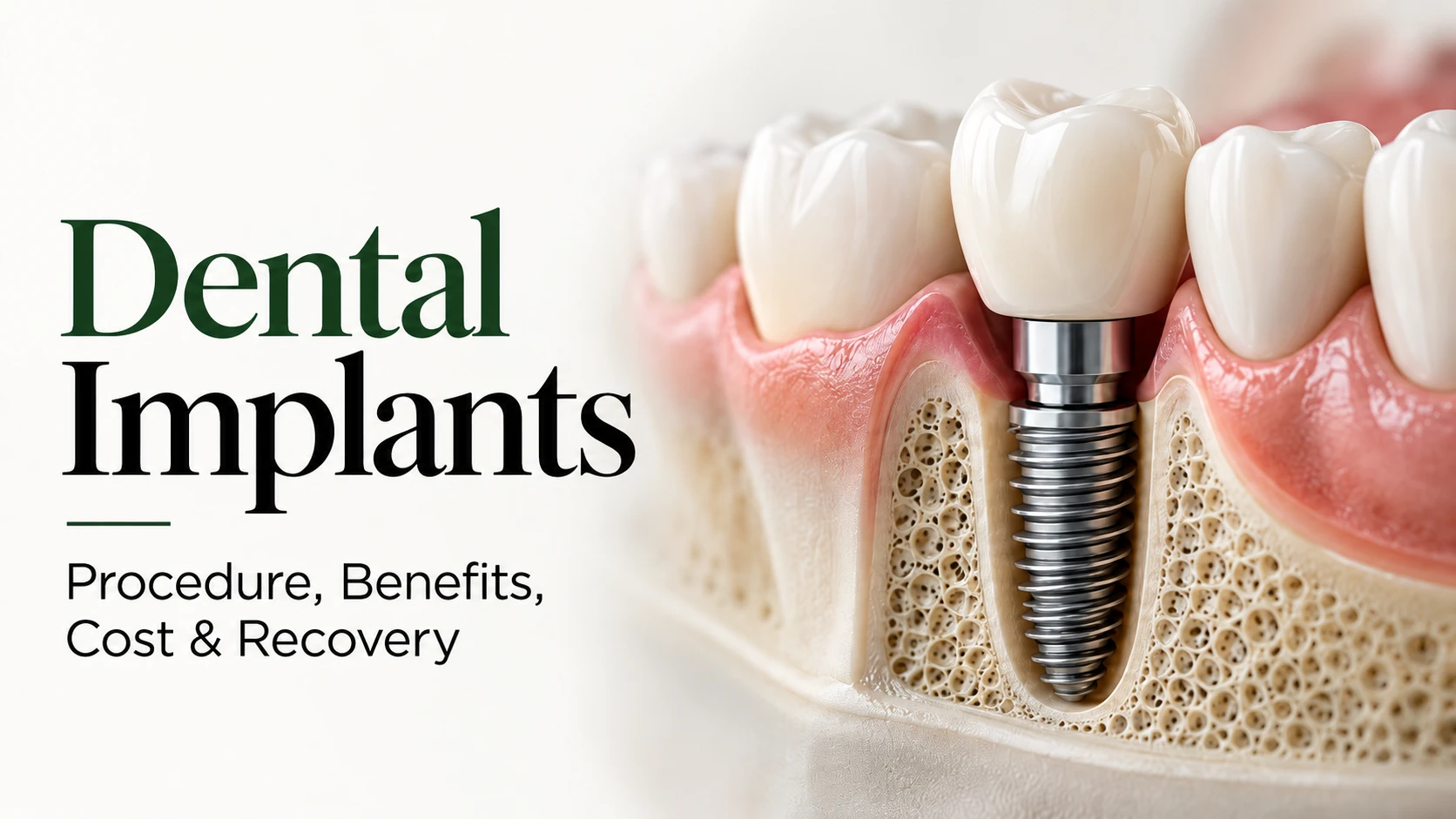
A dental implant is a biocompatible fixture, usually made from titanium or ceramic, placed in the jawbone to support a replacement tooth. It replaces the tooth root, not the visible tooth.
A typical implant-supported tooth has three parts: the fixture in bone, an abutment connecting it to the restoration, and the crown—the visible artificial tooth. Implants can also support bridges or dentures.
When Are Dental Implants Used?
Implants may replace one or several missing teeth, including teeth that cannot be restored. Multiple implants can support bridges or stabilise certain dentures.
Not every gap needs an implant. A bridge, denture or sometimes no replacement may be reasonable. Available dental services and treatment options depend on your oral health.
Who May Be Suitable for Dental Implants?
Assessment includes gum health, jawbone volume, oral hygiene, bite and medical history. Gum disease or infection may need treatment first. Your dentist will also assess whether you can clean around the planned implant and attend future reviews.
Smoking increases healing risks. Diabetes does not automatically exclude implants, but glucose control matters. Medicines affecting bone, including some osteoporosis treatments, need careful review. Do not stop prescribed medicines without medical advice.
Age alone is not decisive, though jaw growth should be complete. Surgery and maintenance must suit your circumstances.
What Happens During the Dental Implant Procedure?
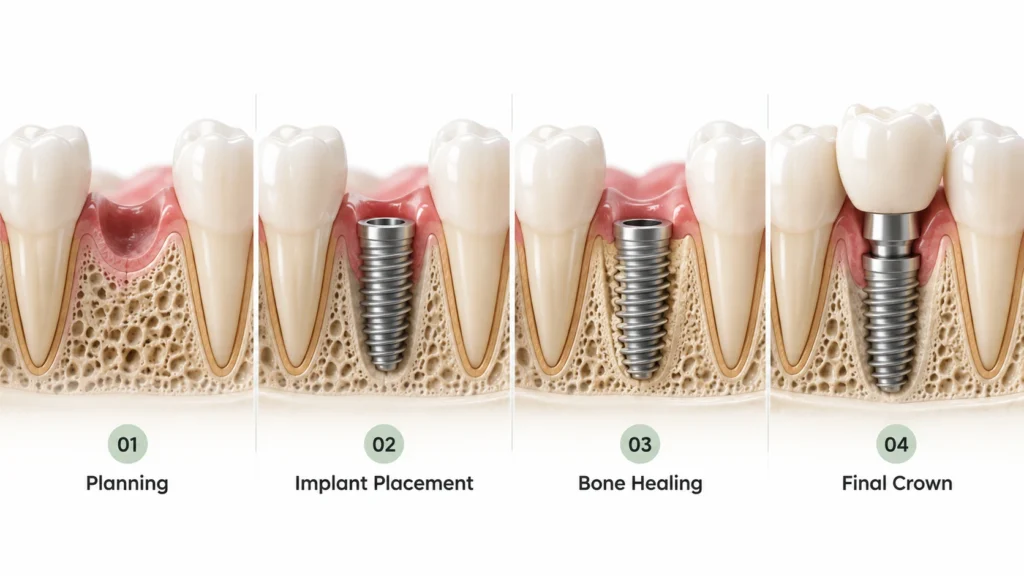
The dental implant procedure involves stages; some can be combined, while others require healing time.
Step 1: Consultation and Examination
Your dentist reviews your history, gums, teeth and bite. X-rays or three-dimensional imaging, when indicated, assess bone and nearby anatomical structures. Discuss alternatives, risks, stages and costs.
Step 2: Tooth Removal, if Required
An unrestorable tooth may need extraction. Immediate implant placement is sometimes possible, but infection, bone condition and stability affect timing.
Step 3: Bone Grafting, if Needed
A bone graft for a dental implant may rebuild insufficient bone using bone or bone-substitute material. It is not always needed and may precede or accompany placement.
Step 4: Implant Placement
Under local anaesthesia, the dentist prepares a planned space in the jawbone and inserts the fixture. Stitches or a healing component may be used. The precise approach depends on the tooth position and the planned restoration.
Step 5: Healing and Osseointegration
Bone gradually bonds with the implant surface—a process called osseointegration. This provides support for chewing. Timing varies with bone quality, position, additional procedures and health.
Step 6: Abutment and Final Tooth
Once sufficiently stable, the implant receives an abutment and dental implant crown or other restoration. A temporary tooth may be fitted sooner without indicating complete integration.
Are Dental Implants Painful?
Patients often ask: are dental implants painful? Effective local anaesthesia usually prevents sharp pain during placement, although pressure is possible. Tell your dentist if something hurts.
Soreness, swelling or bruising may follow. Follow postoperative instructions and report worsening pain, fever, persistent bleeding or increasing swelling.
Dental Implant Recovery and Healing
Early dental implant recovery involves the gums and nearby tissues. Follow advice about soft foods, gentle cleaning, protecting the site and follow-up visits.
Early recovery is not complete implant healing. Bone integration continues after soreness settles. Total treatment can take several months or longer, particularly with extractions or grafting. A shorter initial recovery does not mean the implant is ready for unrestricted chewing.
What Are the Benefits of Dental Implants?
Dental implant benefits may include improved chewing, fixed replacement teeth and more stable dentures. A single tooth implant may avoid reshaping neighbouring healthy teeth for a bridge.
Implants transfer chewing forces to bone and may limit local bone loss, but cannot prevent all bone changes and still require maintenance.
What Are the Risks and Limitations?
Risks include infection, bleeding, injury to neighbouring teeth or nerves, and sinus complications in some upper-jaw cases. Integration may fail; crowns or screws may chip or loosen.
Plaque may cause peri-implant mucositis (gum inflammation) or peri-implantitis (inflammation with supporting bone loss). Planning and maintenance reduce, but never eliminate, risks.
How Long Do Dental Implants Last?
Implants can function for many years without a guaranteed lifespan. Gum and bone health, smoking, medical conditions, hygiene, bite forces, grinding and dental reviews all matter.
The fixture and crown have different lifespans: a stable implant may still need a new crown because of wear or damage.
How Much Do Dental Implants Cost?
Dental implant cost varies because patients do not all need the same treatment. A straightforward single-tooth replacement differs from an implant-supported bridge or treatment involving several missing teeth.
The main factors influencing dental implant cost in Ahmedabad include the number and type of implants, imaging, extraction, available bone, possible grafting, implant system, abutment, crown material, laboratory work and any additional surgical or restorative care.
Ask for a written, itemised treatment plan. Check whether a quotation covers scans, the implant fixture, abutment, temporary restoration if needed, final crown, grafting, follow-up visits and management of possible complications. Comparing only an advertised price for the implant fixture can give an incomplete picture of the total cost. It is reasonable to ask which costs are confirmed and which may change if the examination reveals additional treatment needs.
Dental Implant vs Dental Bridge: What Is the Difference?
When comparing dental implants vs bridge treatment, the main difference is support. A conventional fixed bridge generally relies on neighbouring teeth, which may need reshaping. An implant-supported crown is anchored in the jawbone and may avoid altering adjacent healthy teeth.
A bridge does not require implant surgery and may be completed sooner. It may be particularly reasonable when neighbouring teeth already need crowns. An implant requires sufficient supporting bone, surgical suitability, healing time and ongoing care; upfront costs may also differ.
Neither option is universally preferable. Bridges need cleaning beneath the replacement tooth, while implants need cleaning around their gum margins. Your dentist should consider the gap, adjoining teeth, gum and bone condition, likely maintenance and your preferences.
How Do You Care for a Dental Implant?
Brush twice daily and clean around the implant with floss or suitable interdental brushes as advised. Attend recommended examinations and professional cleaning appointments. Avoid smoking where possible, and discuss teeth grinding if it affects your bite.
Bleeding gums, swelling, persistent discomfort or movement of the implant or crown should prompt a dental assessment. Implants cannot develop tooth decay themselves, but the surrounding tissues can become diseased.
When Should You Speak With a Dentist?
Consider an assessment if you have a missing tooth, a tooth thought to be beyond repair, difficulty chewing or problems with an existing bridge or denture. The choice between an implant and other treatment should follow examination and imaging when indicated, not photographs or online advice alone.
Dental Implants in Ahmedabad
If you are exploring dental implants in Ahmedabad, ask for an assessment that covers your remaining teeth, gums, available bone, health history and the complete treatment plan. Differences between quotations may reflect different procedures or restorations, so clarify exactly what is included. A written explanation of the stages can also help you plan appointments and healing time.
Carrot Dental, Satellite, Ahmedabad, located opposite Seema Hall on 100 Feet Road, offers implant consultations as part of its dental care. Patients looking for a dentist in Satellite, Ahmedabad can discuss whether an implant, bridge or denture is suitable after an examination. For an appointment or treatment enquiry, contact Carrot Dental.
Frequently Asked Questions
Are dental implants painful?
Local anaesthesia usually controls pain during placement. Some soreness and swelling afterwards are expected; the amount varies.
How long does a dental implant procedure take?
Placement may occur in one surgical appointment, but consultation, healing and the final restoration usually involve separate visits.
How long does a dental implant take to heal?
Initial gum recovery is quicker than integration with bone, which can take several months or longer depending on your circumstances.
Can an implant be placed immediately after extraction?
Sometimes. Immediate placement depends on infection status, remaining bone and whether the implant can be positioned securely.
How long do dental implants last?
They may function for many years with appropriate care. The crown may need replacement even when the implant remains stable.
Can smokers get dental implants?
Some can, but smoking increases healing and implant-related risks. Stopping smoking is strongly encouraged.
Can people with diabetes have dental implants?
Possibly, depending on glucose control, gum health and other risks. A dentist must assess each situation individually.
Is a dental implant better than a bridge?
Not necessarily. Bone availability, neighbouring teeth, surgery, costs and patient preferences all influence the decision.
What affects dental implant cost?
The number of implants, scans, bone grafting, extractions, restorative materials and complexity of care all affect the total.
Conclusion
Dental implants are one way to replace missing teeth, but they are not appropriate for everyone. Safe planning considers gum health, available bone and medical history; treatment involves surgical and restorative stages. Long-term cleaning and dental reviews remain essential. An individual assessment is the right starting point.
